Grantigen’s Research Does Not Follow Trends
Grantigen conducts its own proprietary self funded research in any area of biomedical sciences that we find interesting. Unburdened by patents and investors’ expectations, unbothered by the report obligations to granting agencies, unconcerned by the pressure to publish and most importantly, untroubled by the generally accepted consensus on what constitutes “serious science” and what the peers may think, we are able to look into any topic and change interests on a dime. We don’t follow trends. This is how science should be done. Our motivation is curiosity and the desire to improve our own health.
THE AREAS OF OUR CURRENT RESEARCH INTERESTS ARE:
Iodine Metabolism
Iodine is a misunderstood element. There are indications that our bodies require more iodine than what we get with food. Still, iodine is considered toxic while fluoride is regularly used in drinking water. Any good student of chemistry, simply by looking at the periodic system of elements, must know (those things are on exams) that the reactivity of halogens decreases in the group. Therefore, halogen reactivity decreases in this order:
F2 -> CL2 ->Br2-> I2.
We know that our bodies depend on the chloride ions for maintaining membrane potential, while chlorine gas is not needed by any cells. Fluoride is not needed by any cells in our body and fluorine gas is even more dangerous than chlorine gas.
Bromide is needed for collagen IV crosslinking as a cofactor for the enzyme perohidasin. We are beginning to see a pattern here.
What about the least reactive halogen Iodine and its reduced form, iodide? The Thyroid gland needs it. Should we accept that we need just enough Iodide to produce the essential hormones while the element has no other functions in the body and therefore is toxic beyond microgram quantities? We have already confirmed some immediate benefits of Iodine supplementation. The internet buzz is NOT unfounded.

Here is what one can find about Dr Guy E. Abraham who was a strong advocate of Iodine supplementation. A statement like this usually makes everyone who wants to maintain their scientific reputation steer clear from such ideas:
“Guy E. Abraham was an OB/GYN and endocrinology professor known for advocating high-dose iodine and for criticizing established medical practice related to iodine. His writings are not considered mainstream endocrinology consensus and are often cited primarily in alternative health contexts.”
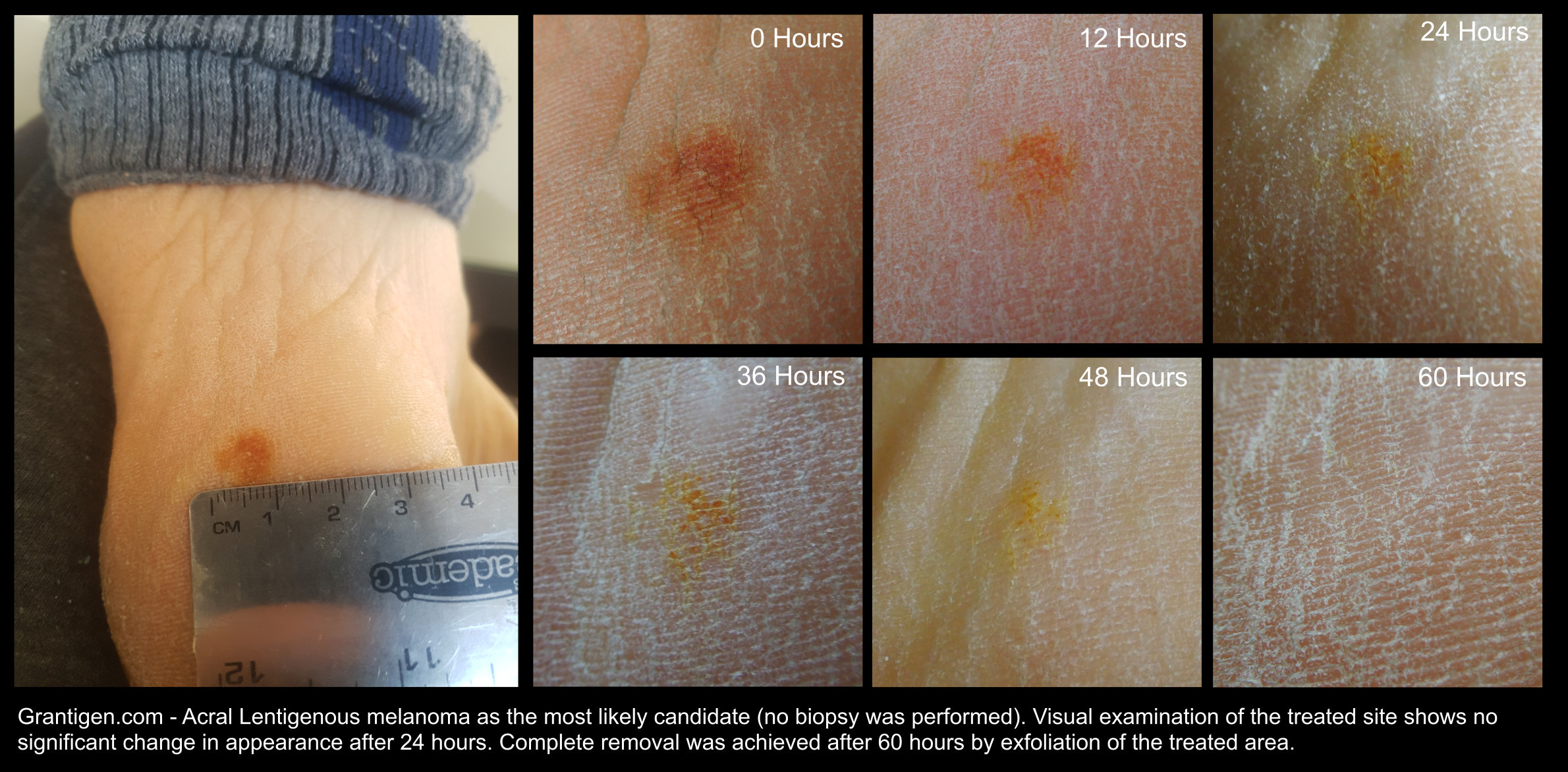
Skin Carcinomas
Our interest in cancer research leads us to skin carcinomas, as those are the most accessible carcinomas to study in vivo. They can serve as proof of concept for other cancers. We understand that the current consensus in biomedical sciences is that “cancer” is a group of similar diseases, but we are free to reject that thinking. The diversity of cancer tissue used for classification of different cancers could simply be tissue-specific manifestations of the same underlying cause of the disease—broken metabolism, as proposed by Otto Warburg. As metabolism can be “broken” in more than one way, the outcome is diverse, which only demonstrates the plasticity of living cells, not the need to look at one specific outcome as a separate disease.
Collagen Repair
This is probably the most interesting topic for the general population and the holy grail of the beauty industry. There are more efforts to achieve the skin deep beauty than curing some serious but curable diseases. How can we alleviate the immeasurable pain and suffering of ageing individuals who want to look young forever? Therapy with a trusted psychiatrist is a good start.
If that doesn’t work (it usually doesn’t), we can try to activate the dormant fibroblasts. Current technology is limited and beyond the (bio)chemical compounds used in cosmetics such as hyaluronic acid vitamins and possibly peptides, fibroblast activation requires some kind of dermis-deep injury which is a crude method for achieving such a delicate desired outcome.
Chemically inducing fibroblasts division thus forcing them to better fill the damaged extracellular matrix (wrinkles) would be ideal. Overstimulation however, could eventually lead to senescence (used up state in simple terms). Unfortunately, it is not known how many times exactly the fibroblasts in the skin have divided at the time of measurement and how many exact divisions do they have left. The latter can be estimated by measuring the length of the telomeres (ends of chromosomes). As cells divide, telomeres get shorter each time. Eventually the cells enter senescence I.E. get too old for anything.
Even that may not be the end of the road as senescent cells can be induced back to pluripotency (stem cell state) by activating Yamanaka factors. This however, is difficult because old cells resist change. Theoretically, one would first need to restore the telomerase activity, possibly modulate the p53 cancer-preventing gene before the full pluripotency is induced. Even that has been done. Senescent centenarians’ cells can go back to pluripotency.
Ideally, we would like to achieve the following:
quiescent but not senescent fibroblasts (easier) -> deliver activating factors with no mechanical injury -> active fibroblasts secrete plenty of collagen -> back to quiescence
We have a cosmetic product in the pipeline and we are working toward improving its efficacy beyond the efficacy of the limited mechanical injury method that we use as the standard. Ideally, there should be no injury required.
Vitiligo
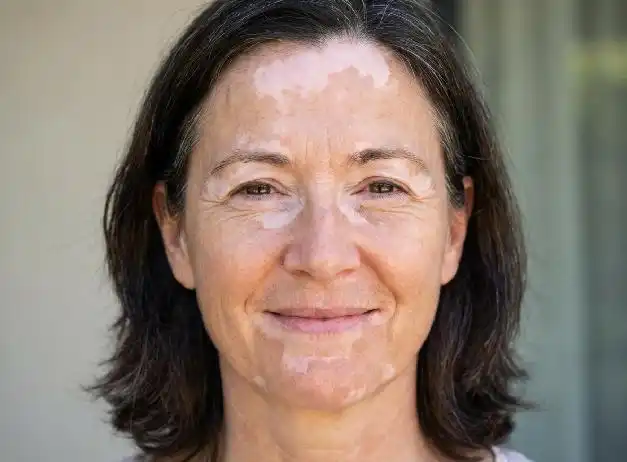
Vitiligo is a superficial and non-life threatening condition. It affects up to 2% of the population. The low number of affected individuals and the cosmetic nature of the disease gives it a low research priority for the mainstream science. Those of us affected by it may disagree. It is incompatible with summer outdoor activities that are essential for overall health.
We have a solution that works on small areas of the skin but we need more sunny days to further develop it. Treating large areas especially on the face is still very challenging.
Candida albicans
It is Grantigen’s founder opinion that Candida is a wolf in sheep’s clothing and that there should be zero tolerance for Candida. Candida may not be just an indifferent or even beneficial part of the gut microbiome, but rather a dangerous intruder. It is always present in us, on us and around us. We see it as a threat only when there is overgrowth leading to infection with inflammation. While there are beneficial fungal species such as Penicillium that secrete (to us) beneficial molecules, there are other kinds of fungi that secrete toxins. Aspergillus species secrete the well-known aflatoxins that are proven carcinogens.
What does Candida albicans secrete?
- Secreted aspartyl proteases (SAPs). These proteases break down host proteins for nutrient and aid tissue invasion.
- Phospholipases that damage host cell membranes, aiding colonization.
- Lipases that break down lipids for energy and help biofilm formation.
- Candidalysin: A peptide toxin that can damage epithelial cells and trigger immune responses.
- Polysaccharides and extracellular matrix molecules to build biofilms, which protect it from stress, antibiotics, and immune attack.
Which of these molecules seem beneficial to us? Could there be more of them? Who can prove that a persistent, life-long infection that we call normal presence of Candida in the gut has nothing to do with colorectal cancer? Colorectal cancer is the second most prevalent cancer in women and the third most prevalent in men. It is the second by the death rate. Modern diet consists of large amounts of carbohydrates that candida feed on, though the number of health-conscious individuals is on the rise.
We are not involved in the complex research investigating the molecular mechanism by which Candida may potentially initiate oncogenesis. Research of this kind could take decades and require significant funds. Claims that Candida plays a role in carcinogenesis are currently rejected by the American Cancer Society; therefore, government-funded granting agencies are unlikely to approve a grant on this topic. We are willing to collaborate with a research group that may have a strong interest in the topic. Granting agencies do change their policy if sufficient preliminary data is available.
A new paper shows that candida increases melanoma aggressiveness.
Epstein – Barr Virus
EBV is a modern plague but not recognized as such.
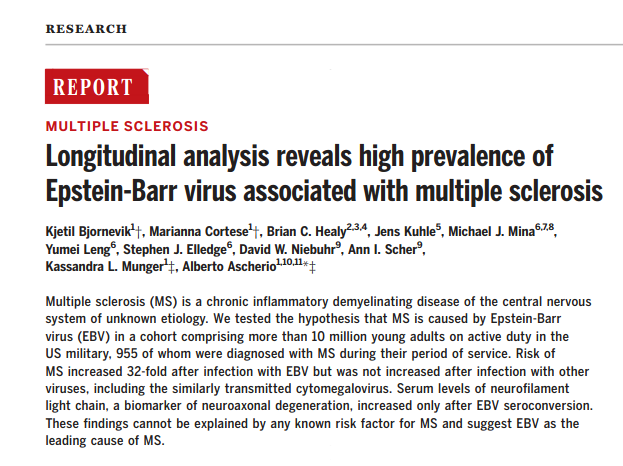
Recent findings indicate that EBV is associated with Multiple Sclerosis. How does this align with the autoimmune theory? There are indications that EBV might be the cause of arthritis
The body is probably trying to eliminate the virus in the joints, yet we see that as self-damage. EBV proteins may resemble joint tissues, triggering the autoimmunity. The current treatment is based on anti-inflammatory drugs. Our focus is on the virus. Developing an antiviral biological drug is a long and expensive process. Finding a small molecule present in food or water of the world populations with low incidences of EBV is a wise starting point. We are doing exactly that.
RESEARCH TOPICS OF LITTLE INTEREST
Obesity and Type 2 Diabetes
This kind of research is popular but we don’t see a big scientific value in it. There have been a total of 12588 grants awarded by NIH in 2025, of which 788 were related to diabetes.
The numbers of diabetes grants are on the 22% decline in comparison to the previous ten year average. What could be the reason? It is falling out of favor with the NIH or the researches themselves are choosing a different more trendy topic because Ozempic works?
The latest key findings are that over-consumption of animal protein leads to type 2 diabetes.
Obesity and diabetes go hand in hand. We do not need to reinvent the wheel but rather draw from the experience of the past rural religious societies that did not have scientific knowledge nor the comforts of modern-day life. They were physically active and had strategically spaced fasting periods throughout the year. They did not consume much animal protein. Nowadays, we are doing the opposite: no fasting and little or no physical activity.